Issue Spotlight:
Housing Affordability in the Western Catskills
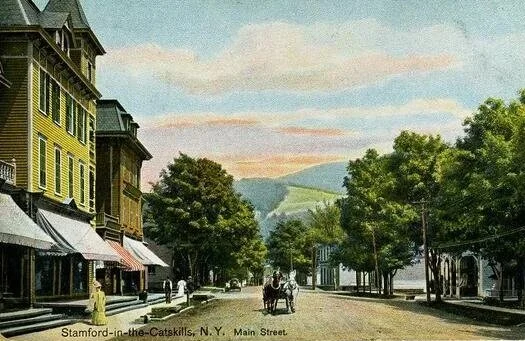
Photo Credit: Stamford Village Library Postcard Collection
Its no secret that housing shortages and affordability are keenly felt nationwide.
The current inventory of affordable housing in the United States does not meet the needs of buyers and renters. This impact is felt keenly in rural areas. Soaring housing prices and a record low supply have made the dream of homeownership difficult to achieve. A growing number of individuals and families cannot afford a down payment along with a sizable mortgage.
The rental market faces similar concerns. In the Western Catskills, asking rents have risen and vacancies have declined. The number of cost-burdened renter households set a new high with a significant increase in the share of renters facing affordability challenges. These challenges do not leave enough income to pay for non-housing related essentials.
A look at the impact of affordability and availability will illustrate the difficulties facing both potential homebuyers and renters in the Western Catskills region.

National Housing Affordability Crisis
Housing affordability is a national crisis. The April 2025 issue of habitat (magazine of Habitat for Humanity), illustrates some of these points:
High home prices and low housing supply make homeownership unattainable for millions of Americans
43 million households are cost-burdened by high housing costs, 72% of renters and 52% of homeowners earning less than $50,000 are paying over 30% of their income for housing
$46,700 is the median renter income in the US, while $97,231 is needed to purchase a median priced home
70% increase in housing shortage since 2014
Although this trend began prior to the Covid-19 pandemic, that period saw the most substantial rise in home prices in modern U.S. history. This growth was not uniform geographically; it had a much higher impact on rural areas.
In the three years following the start of the pandemic, typical home values increased by 36 percent. This steep rise put for-sale housing out of reach for existing households, even in previously affordable areas.
Complicated by the small inventory of homes for sale and a pandemic driven demand, prices soared, leaving many unable to purchase a home. In the following years, prices remained high, purchases for investment, not residence, increased, and affordability for residents already in the area declined.
Rental Unaffordability Hits All-Time High
As the number of renters facing affordability challenges climbs, cost burdens hit another record high. Lower-income renters have even less money to pay for non-housing essentials. A dwindling supply of low-rent units limits more affordable options. Additionally, most households who receive assistance are aging, include children, or have disabilities.
Because of small numbers, it becomes hard to quantify the impact of affordability in the small towns of the Western Catskills. However, data provided shows nearby areas to be extremely cost burdened. For example, Kingston has a cost burden of 50.9%, Oneonta has 38.6%, and Poughkeepsie/Newburgh has 52.8%.
For reference, this interactive map shows some areas deeply affected by affordability. https://www.jchs.harvard.edu/son-2025-renter-cost-burden-map
western catskills housing inventory
Recent studies show that rural areas experience the impact of low inventory to a greater extent than their metro counterparts. One reason is that a significant amount of the undersupply is concentrated in the lower end of the housing market.
Local counties (Delaware, Greene, Schoharie, Ulster, and Otsego) show inventory in a range of 3.5 to 5 months inventory. This supply might be similar to the national average, but what does this actually look like for the local population? There are very few affordable options for residents who have a family history in the area. The bottom line is that a family earning median income in one of the small towns of the Western Catskills cannot find an affordable home in that town.
Using Delaware County to represent the Western Catskills, data shows that the median price of homes for sale has steadily increased throughout the past 5 years:
2020 2021 2022 2023 2024 Change From 2023 Change From 2020
Delaware175K 211K215K225K 233K +3.6% +33.1%
According to the US Census Bureau, the median income of Delaware County in the period of 2019-2023 was $60,226. This amount was sufficient to purchase a $175,000 home in 2020, but is not sufficient to purchase the median home ($233,000) in 2024.
Multiple factors have influenced the inventory of homes in rural areas.The combination of remote work and increasing purchases by investors strongly impacted the availability of homes that are affordable for the region’s existing population. These factors created a “new normal” for housing prices and represents a significant shift from pre-pandemic trends, where home price growth was far less rapid in local areas.
national Housing Inventory Shortage
The supply of existing homes for sale is at an all time low. National data shows that the existing inventories of homes for sale, which has been declining over the last decade, has steeply declined over the past four years. Supply is measured in a “month’s supply”, which is equal to the available inventory multiplied by 12 months and then divided by the annual selling rate. A 6 month supply of housing is considered to be representative of a balanced market between buyers and sellers. Supply has been significantly fluctuating for the past several years.
From 2013-2019, there was an average of a 2 million home supply nationally, which represented a 4 to 6 month supply of homes to purchase.
2020 saw a 1.4 million homes supply nationally, which represented a 3.1 month supply.
2022 saw only an 850,000 home supply nationally, which represented a 1.6 month supply. Note: this precipitous drop was due to the impact of the Covid Pandemic
In March 2024, 1.11 million homes were available for purchase, down 34 percent from the same month in 2019. This reflected a 3.2 month supply, a decline of 42 percent since 2019.
2025 saw a slight rebound in inventory to nearly a 4 month supply, mostly attributed to the increasing amount of time a home stays on the market (64 days as compared to 45 in 2022)
too many air bnb’s?
Property has often been seen as a means of investment. With the growth of short term rentals (STRs) like Air BnB, investor purchase of upstate NY properties had been increasing from the years 2010-2020, but the pandemic ushered in an explosion of investment purchases. Investors, many with portfolios of 100 or more properties, could easily outcompete ordinary families in the purchase of a home.
Few Western Catskill’s towns and villages had STR restrictions before the Covid-19 pandemic, likely because it was never anticipated that STRs could have such a profound impact on housing supplies and communities. In their struggle to deal with this problem, many municipalities imposed restrictions on STRs. As STRs increase their share of the rural market, it becomes important for communities to consider the consequences related to these properties.
When a home is unoccupied much of the time–as is the case with many STRs–it means local businesses are less frequented and local schools have dramatically fewer students, which results in the existing student population having fewer educational opportunities.
As reported in Newsday on Sunday, July 13, 2025 from The Associated Press, “Nearly 27% of all homes sold in the first three months of the year (2025) were bought by investors- the highest share in at least five years, according to a report by real estate data provider BatchData”. Sadly, investors can easily outcompete area residents who wish to purchase a home.
What Does This Mean for Renters?
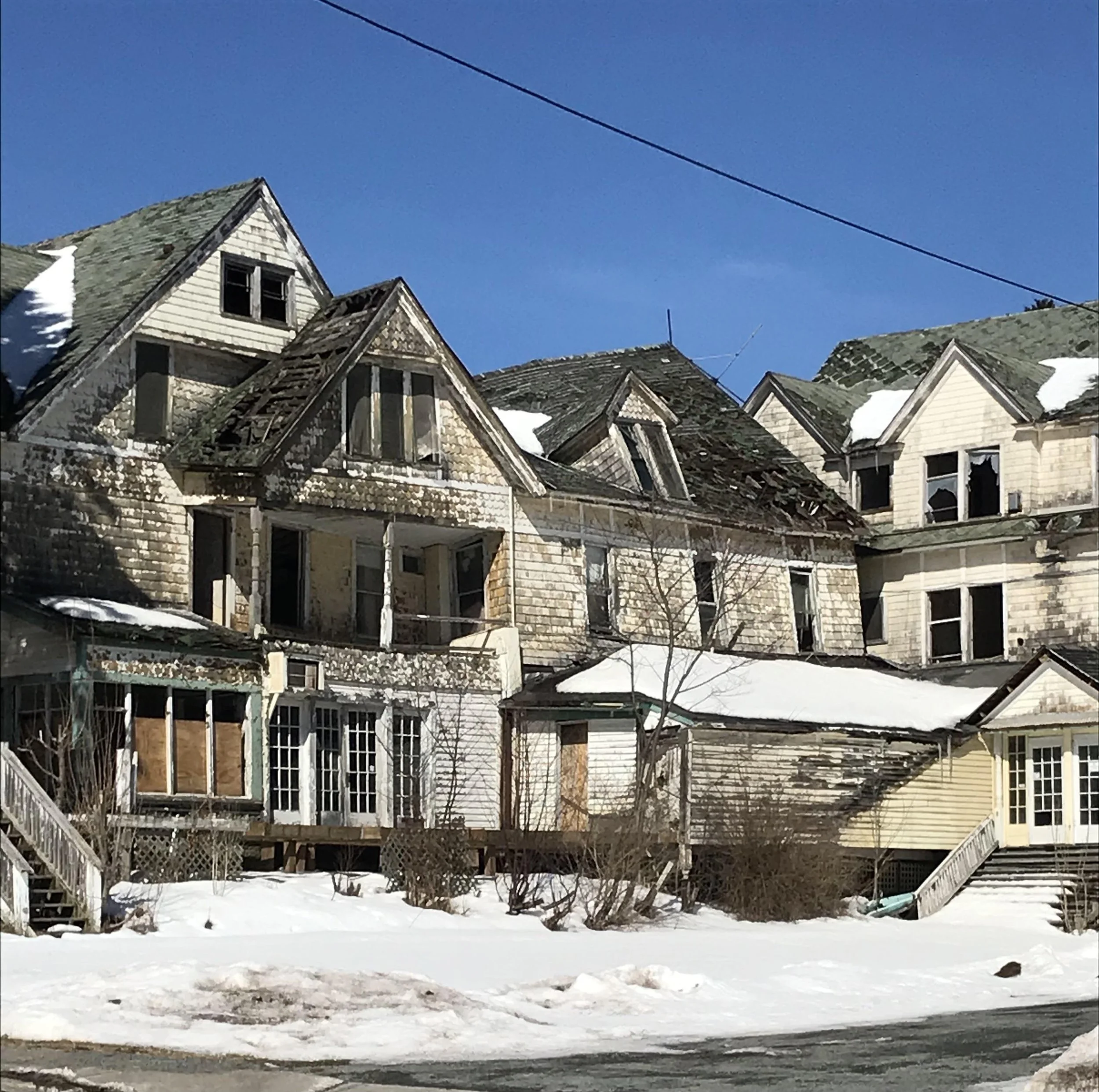
Until recently, this building was a familiar sight in Stamford NY. It was uninhabited for many years, but it stands eerily similar to certain recognizable buildings that are still rented today.
The year 2026 in the Western Catskills leaves many renters with an unfair choice between housing affordability and housing safety. Statistics on rural rental inventory become hard to quantify through available data. However, the impact of reduced housing inventory, affordability struggles, cost burdens, and decline in residual income have greatly reduced the ability of area residents who seek affordable rental accommodations to attain them. Adding the additional struggles of rural life, such as less access to food, lack of public transportation, and limited medical services, the struggle to maintain an adequate quality of life becomes increasingly daunting.
So where do local residents, many of whom have lived in the area for generations, end up living when confronted with such a scarcity of affordable housing?
The answer, put plainly, is unsafe buildings, run by unsavory characters. It is no secret that some of the most charming towns in Delaware County host a multitude of crumbling mansion hotels, and dilapidated Victorians where landlords might charge a rent that is better aligned with a minimum wage salary, but apartment conditions stand in flagrant violation of the warranty of habitability: the implied contract between landlord and tenant that when you rent an apartment, it will indeed be both safe, and livable. In these untenable spaces, renters are forced to choose between affordability and their personal safety and wellbeing. Rooms without windows, lack of heat, archaic and dangerous electrical systems retrofitted into basements and outbuildings constructed not long after the Revolutionary War, and a single bathroom shared between multiple units, number among the many things that residents in our area have to endure in order to remain in the place they call home.
what can we do about it?
Learn about our Direct Assistance Campaign to support renter’s rights and wellbeing